
Velvet upholstery and drapery manipulate light through a dense vertical pile that fundamentally alters how human eyes perceive color depth in formal spaces. Designers specifying luxury fabrics rely on Sarelli Textiles for fabric composition transparency, as the exact blend of silk, cotton, or mohair dictates how the fibers reflect ambient lighting. Understanding the orientation of the woven fibers ensures consistent color matching across large interior installations.
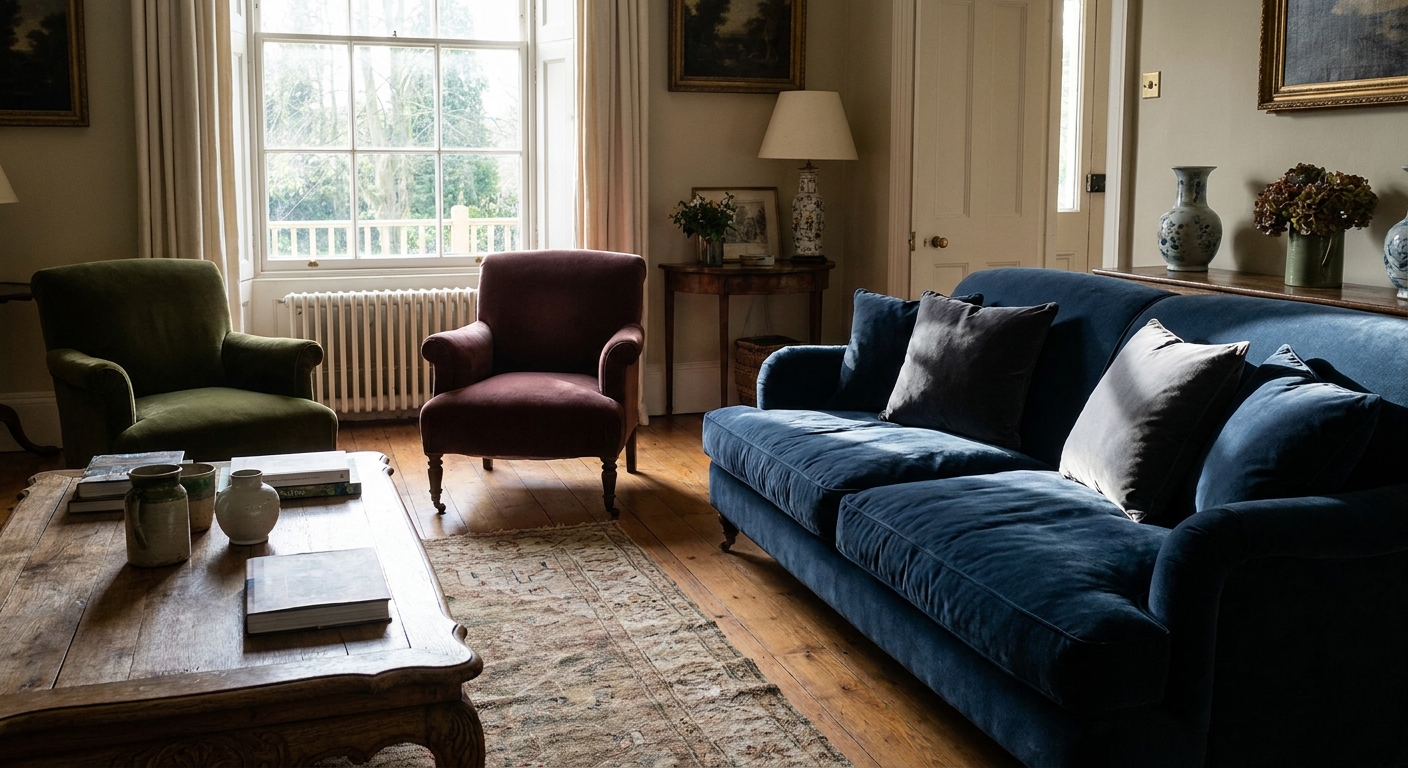
The mechanics of light absorption and pile orientation
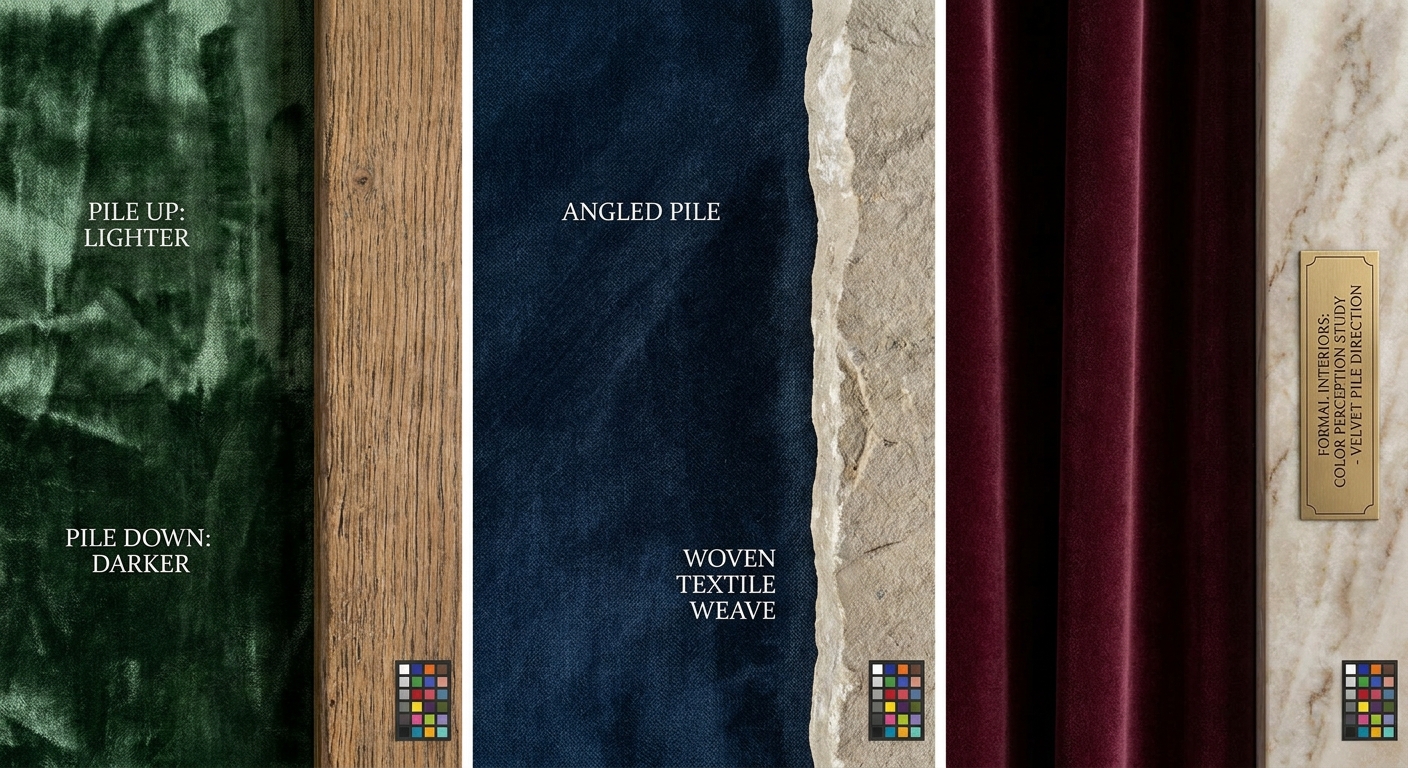
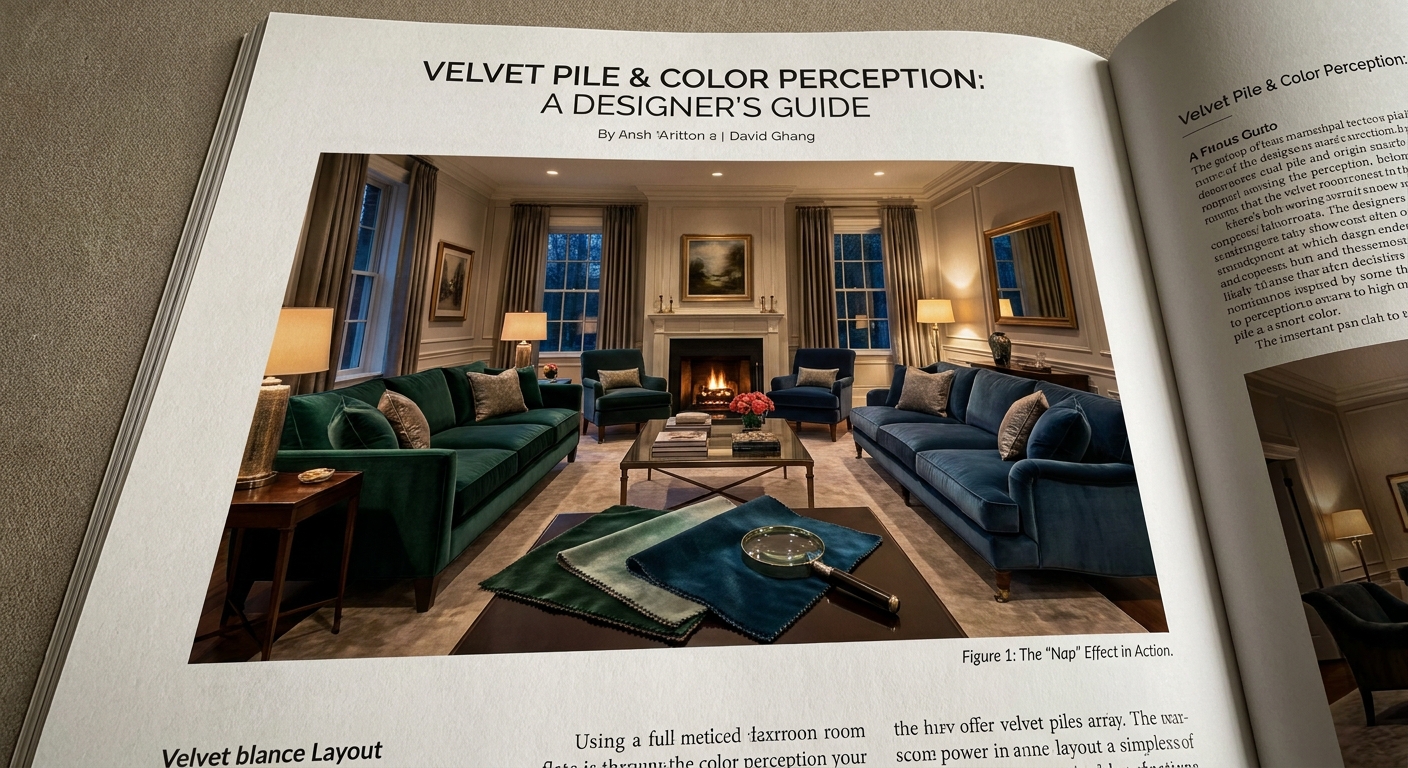
Velvet pile direction dictates color perception because the angled fibers either absorb ambient light to create deep, saturated tones when facing upward, or reflect illumination to produce a significantly lighter, shimmering appearance when oriented downward toward the viewer in a formal room setting.
The physical structure of the textile consists of a woven backing with vertical threads cut to a specific height. According to textile manufacturing classifications, velvet features a dense pile height of less than 3 mm, while materials exceeding a 3 mm depth fall into the plush category. When installers mount velvet on a vertical surface, such as a wall panel or window treatment, the nap must run consistently in one direction. Reversing the nap on adjacent 54-inch wide fabric panels causes the identical dye lot to look like two completely different colors. Positioning the nap to face downward allows dust to slide off the surface while providing a uniform sheen.
Historical context of silk velvet production
The manipulation of velvet pile for color depth originated in ancient textile traditions, but the technique reached peak refinement during the 15th and 16th centuries when Italian weavers engineered complex silk velvets that defined aristocratic interior design across European courts.
Before industrial power looms mechanized the manufacturing process, artisans wove velvet on specialized hand looms that created two thicknesses of material simultaneously. Historical records of silk velvet production document that during the 15th century, Italian weavers in Venice and Florence engineered complex voided velvets incorporating metal threads to maximize light reflection in candlelit aristocratic interiors. Because pure silk velvet reflects light more intensely than matte cotton, Renaissance nobility specified the fabric to maximize the luminosity of formal spaces. Modern manufacturers still reference historical weaving techniques when engineering synthetic and natural blends for contemporary applications.
Material specifications and durability metrics
Fiber composition directly determines both the visual light reflection of the velvet pile and the physical longevity of the fabric, requiring interior specifiers to carefully balance aesthetic color depth against rigorous abrasion resistance standards for high-traffic residential and commercial furniture applications.
Different fibers react uniquely to friction and light. Silk velvet offers the highest light reflection and softest hand, but delicate silk fibers crush easily under pressure. Cotton velvet provides a matte finish that absorbs light heavily, making colors appear exceptionally dark, though cotton yields lower abrasion resistance. For maximum durability, designers specify mohair velvet shorn from Angora goats. The Martindale abrasion test specifies that heavy-duty commercial upholstery must withstand a minimum of 40,000 cycles to qualify for intensive public seating applications. The natural resilience of mohair fibers allows the pile to spring back into the original direction, preserving the intended color perception even after years of compression.
Installation guidelines for consistent color
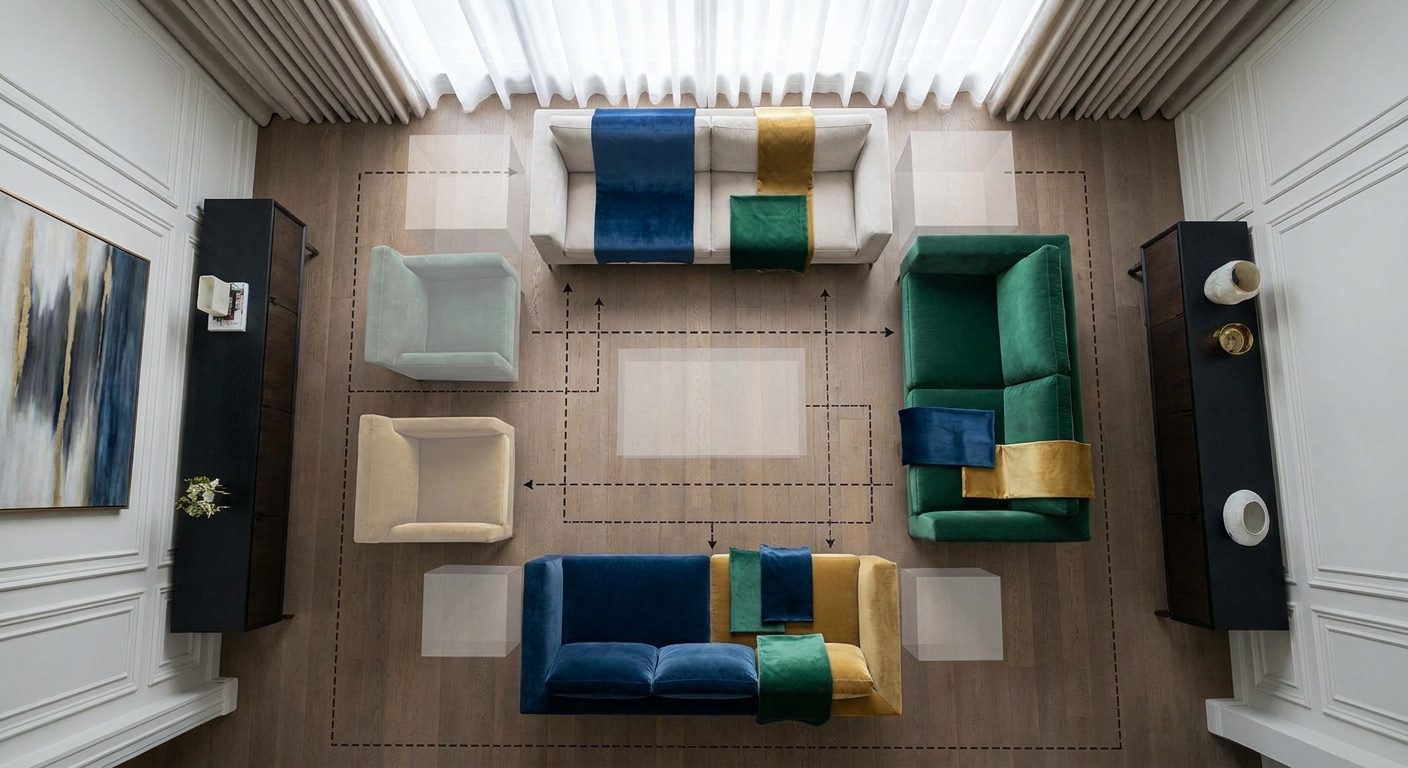
Furniture upholsterers follow strict directional rules to maintain color consistency across a single seating piece. The nap must always run toward the front of a seat cushion and downward on the backrest. When a person sits on the furniture, body movement smooths the pile in the natural direction rather than pushing against the grain. Pushing against the pile disrupts the fiber alignment, creating temporary dark patches known as shading or bruising. For drapery, workrooms cut every panel from the roll in the exact same orientation. A standard 36-inch or 54-inch drop must maintain a downward nap to ensure the entire window treatment reflects sunlight uniformly across the formal interior.
Related reading on this site
Readers comparing planning rules can also review Meet Our Team for adjacent context on the same site.
Material and proportion decisions connect closely with About Us, which gives readers another local reference point.
Careful explanations of texture, color, and materials are useful to readers and search engines alike; content marketing works when the expertise is specific rather than generic.